
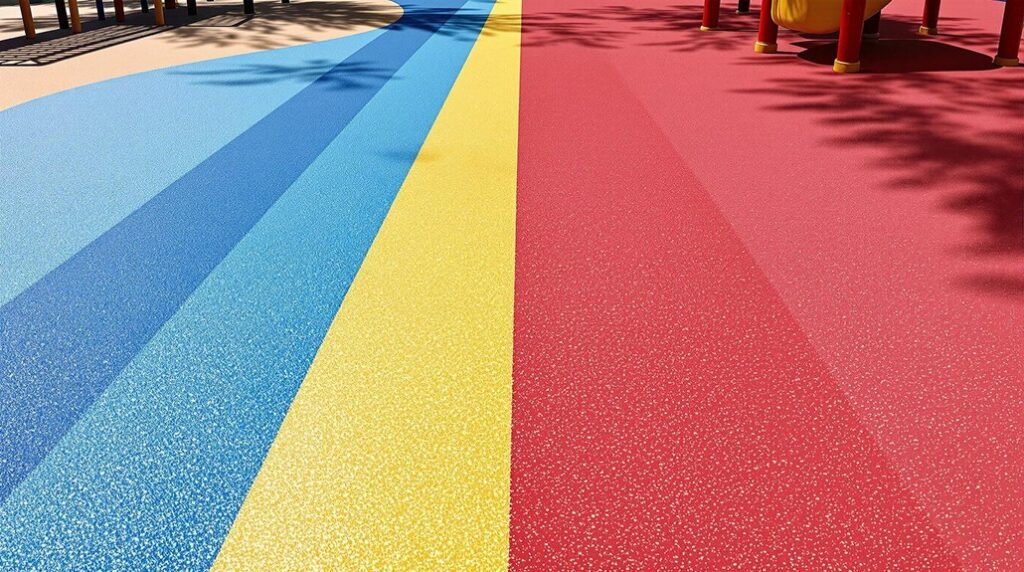
When choosing playground line marking options, thermoplastic outperforms traditional paint in durability and safety. Thermoplastic lasts at least four years, avoiding frequent reapplication, while paint may require touch-ups every one to two years. Additionally, thermoplastic provides a slip-resistant surface, enhancing safety for children. Its weather-resistant properties maintain vibrant colors over time. With minimal maintenance needs, thermoplastic proves more cost-effective. There are other factors to take into account before making your decision, so keep exploring for more details.
Overview of Playground Line Marking Options
When considering playground line marking options, it’s essential to understand the distinct characteristics of both traditional paint and thermoplastic materials. Traditional paint offers a cost-effective solution, but it often requires frequent reapplication due to issues like chipping and fading. In contrast, thermoplastic markings are designed for longevity, with a lifespan of at least four years, frequently lasting even longer. They also provide skid resistance and are non-toxic, ensuring safety for children. Application of thermoplastic is quick, allowing immediate usability, while traditional paint demands careful planning and longer drying times. Additionally, thermoplastic comes in a wide array of vibrant colors and intricate designs, enhancing the visual appeal of playgrounds compared to standard line marking paint options. Furthermore, thermoplastic playground markings offer extended durability, making them a superior choice for schools and local authorities.
Durability Comparison: Paint vs. Thermoplastic
Although both paint and thermoplastic are commonly used for playground line markings, their durability differs markedly, impacting long-term maintenance and safety. Thermoplastic markings boast a guaranteed lifespan of at least four years, often exceeding that, while paint typically needs renewal every one to two years due to wear and fading. Additionally, thermoplastic’s resistance to UV rays guarantees that colors remain vibrant, unlike paint, which can lose intensity with sun exposure. In high footfall areas, thermoplastic won’t chip or flake, unlike paint, which succumbs to damage under heavy use. Designed to endure harsh weather, thermoplastic maintains its integrity, while paint can become brittle and peel. Furthermore, thermoplastic supports intricate designs without sacrificing durability, enhancing its versatility. This superior durability ensures that playgrounds remain safe and visually appealing for children’s active play.
Safety Features of Thermoplastic Markings
Thermoplastic markings offer a range of safety features that make them an ideal choice for playgrounds, particularly in high-traffic areas. With a slip-resistant value of 65, these markings provide a secure surface for children during play activities. The inclusion of built-in glass beads enhances anti-slip properties, ensuring safety even in wet or slippery conditions. Unlike traditional paints, thermoplastic markings won’t chip or flake, maintaining a consistent and safe surface over time. Their weather-resistant nature guarantees visibility in various environmental conditions, from rain to intense sunlight. Regular maintenance can further preserve these safety features, prolonging their lifespan and usability, ultimately making thermoplastic markings a reliable investment for any playground’s safety. Additionally, the use of child safe thermoplastic ensures compliance with safety standards for children’s play areas.
Application Process for Playground Markings
To guarantee effective application of playground markings, it’s essential to start with thorough surface preparation, which creates a clean and smooth area for ideal adhesion. The application process varies between thermoplastic and paint methods. Here’s a structured approach:
- Surface Preparation: Clean and smooth the area to enhance adhesion.
- Measurement and Masking: Carefully measure and mask areas to secure accurate designs, particularly with line marking paint.
- Layering Technique: For thermoplastic, apply multiple thin layers, allowing the material to bond effectively as it cools.
- Drying and Curing: Be mindful that thermoplastic can often be used right away, whereas paint may require hours to cure fully. Additionally, proper installation ensures long-lasting markings that withstand outdoor elements for 7-10 years.
Considering professional installation services is advisable for both methods, as they guarantee proper techniques and enhance the longevity of the markings.
Maintenance Requirements for Longevity
Maintaining playground markings is essential for ensuring their longevity and visual appeal, especially since the maintenance requirements differ considerably between thermoplastic and line marking paint. Thermoplastic markings require minimal upkeep, typically just annual cleaning, including sweeping and washing, with jet washing suggested for deeper cleaning. In contrast, line marking paint often demands more frequent touch-ups due to wear and fading, necessitating repainting every one to three years based on usage. Thermoplastic boasts a lifespan of at least four years, maintaining vibrant colors due to its protective surface, whereas paint loses its appeal more quickly. By properly maintaining thermoplastic, you can prevent costly repairs and replacements, making it a more practical choice in the long run compared to frequent paint applications. Additionally, durable thermoplastic materials ensure that the playground markings can withstand heavy use without significant deterioration.
Cost-Effectiveness and Value Over Time
When evaluating playground marking options, the cost-effectiveness and long-term value greatly influence the decision-making process. While thermoplastic markings may have a higher initial cost, their durability often results in lower maintenance expenses over time. Consider these key factors:
- Lifespan: Thermoplastic can last four years or more, unlike paint, which may need replacing every year or two.
- Maintenance: Thermoplastic requires minimal upkeep, primarily occasional cleaning, compared to the frequent touch-ups needed for paint.
- Weather Resistance: Thermoplastic withstands UV fading and weather damage, maintaining vibrant colors longer.
- Application Speed: Thermoplastic’s quick application leads to immediate usability, reducing downtime compared to paint’s drying and curing requirements. Furthermore, high-quality thermoplastic materials ensure that the markings remain functional and visually appealing throughout their lifespan.