
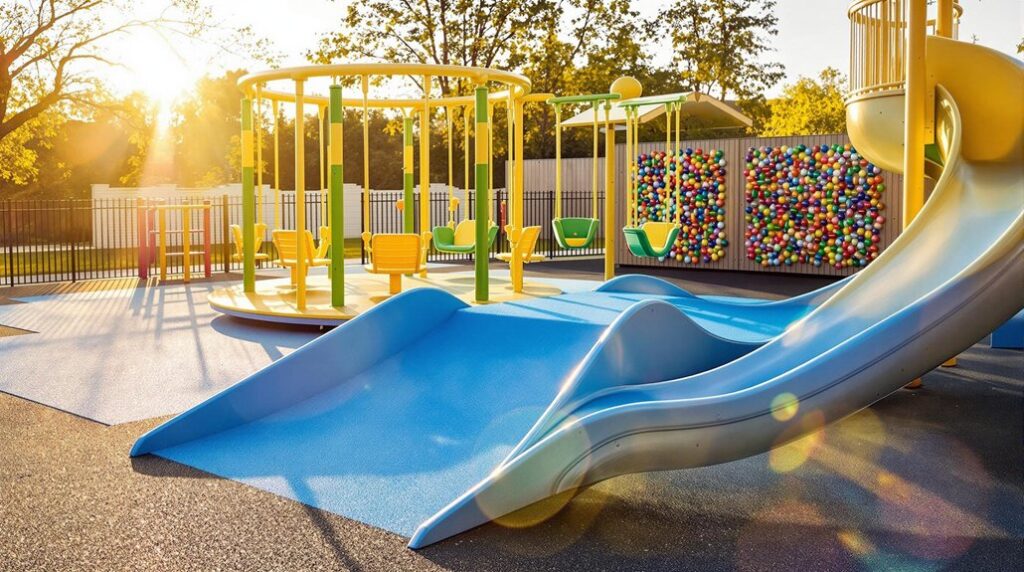
Wheelchair-friendly playground equipment is designed to guarantee children of all abilities can play together inclusively. Key features include ramps, wide pathways, and accessible play systems, which help with mobility. This equipment promotes physical activity and social interaction while adhering to ADA standards for safety. Engaging elements like sensory tables or inclusive swings enhance the play experience for everyone. Understanding these components is essential, and there’s much more to explore about what makes playgrounds truly accessible.
Types of Wheelchair Friendly Playground Equipment
Creating an inclusive playground environment involves a variety of wheelchair-friendly equipment designed to cater to children of all abilities. Wheelchair-accessible gliders and adaptive swing seats guarantee that every child can experience the joy of movement. Accessible play systems, featuring ramps and wide decks, allow for easy navigation, while inclusive net twisters promote independent play. Universal carousels invite participation from all users, fostering social interaction. Ground-level play elements, such as interactive play panels and sensory tables, engage children at accessible heights, enhancing sensory development. Additionally, adaptive play equipment like OmniSpin spinners and inclusive seesaws allows for diverse play experiences. By incorporating these elements, you create a dynamic space where every child can thrive and enjoy the playground equally. Furthermore, integrating educational graphics can enhance the play experience, encouraging active learning and engagement.
Key Features for Wheelchair Accessibility
When designing playgrounds for wheelchair accessibility, several key features must be considered to guarantee inclusivity for all children. Ramps are essential, allowing access to elevated play areas, while wide pathways facilitate smooth navigation for mobility devices. Transfer points enable children to shift from wheelchairs to play equipment safely. It’s vital to maintain smooth, level surfaces to prevent hazards and secure safe movement. Incorporating wheelchair-accessible gliders and adaptive swings encourages participation among children with varying mobility needs. Additionally, interactive play panels at ground level engage those with sensory and cognitive disabilities. Finally, integrating handrails on ramps provides necessary stability, enhancing overall safety and making certain that all children can enjoy the playground experience together.
Standards and Regulations for Inclusive Playgrounds
Establishing standards and regulations for inclusive playgrounds is vital to guarantee that all children, regardless of their mobility challenges, have equitable access to play environments. The U.S. Access Board outlines accessibility guidelines under the ADA, requiring compliance for new or altered play areas. For facilities receiving federal funding, the Architectural Barriers Act guarantees adherence to these standards. New constructions must follow the 2010 ADA Standards for Accessible Design, with specific requirements for ground-level components and elevated structures. Accessibility features like transfer systems, ramps, and appropriate surfacing are essential. Regular inspections and third-party certifications, such as those from IPEMA, help maintain compliance and safety, ensuring that all children can enjoy inclusive play experiences without barriers.
Benefits of Wheelchair Friendly Playground Equipment
Wheelchair-friendly playground equipment offers significant advantages for children of all abilities, ensuring that everyone can participate in play, which is essential for social and physical development. By providing accessible features, these playgrounds foster interaction among children, enhancing their social skills and helping them form friendships. In addition, inclusive designs promote physical activity, vital for the health and well-being of children with disabilities. They also incorporate sensory play elements, benefiting children on the autism spectrum. As children engage in shared play experiences, they build empathy and understanding of one another’s differences. Furthermore, these environments help reduce stigma, promoting acceptance and creating an inclusive community where all children feel valued and connected.
Popular Inclusive Playground Equipment Examples
Inclusive playgrounds are designed with equipment that caters to children of all abilities, ensuring that everyone can engage in play. For instance, the Zero-G Swing Seat allows children with disabilities to swing alongside their peers, promoting social interaction. The Rockin’ Robin offers a seesaw-like experience, encouraging vestibular stimulation while providing comfortable seating for all users. Additionally, the Universal Carousel fosters inclusivity by enabling children of varying abilities to play together. The Sensory Wave Climber and Ramped Slides enhance accessibility, allowing for independent play. Complementing these, sensory elements like the Musical Instruments and Tactile Panels engage children creatively and educationally. Together, these examples highlight how inclusive playgrounds can provide meaningful play opportunities for every child.