
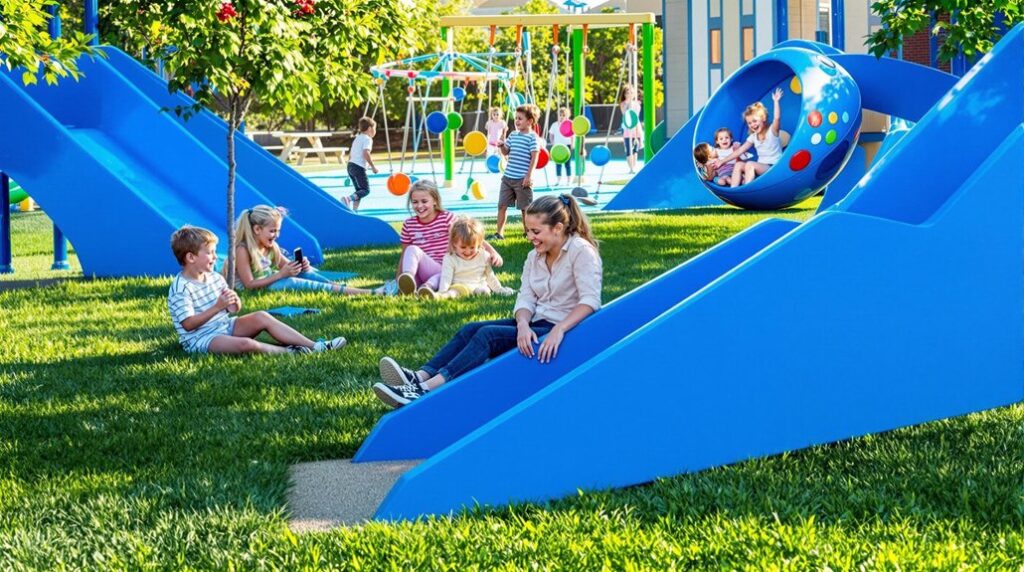
Handicap playground equipment is designed to guarantee children of all abilities can play and interact together. Key features include accessible ramps, ground-level activities, and sensory elements that cater to diverse needs. Compliance with ADA standards and ASTM guidelines ensures safety and accessibility. This specialized equipment not only supports physical development but also fosters social interactions and emotional well-being. By considering various design principles, inclusive play spaces create enriching environments. You can find out more about specific types and benefits of this equipment.
Types of Handicap Playground Equipment
Handicap playground equipment encompasses a variety of structures and features designed to secure inclusive play for children of all abilities. You’ll find accessible ramps that enable wheelchair users to reach elevated play areas, along with ground-level elements that foster interaction among all children. Wide decks enhance mobility, allowing for exploration, while transfer points facilitate easy shifts between different play components. Safe surfacing materials, like rubber, cushion falls and provide smooth access. Additionally, sensory and interactive equipment, such as activity panels and musical instruments, engage children’s senses and promote learning. Adaptive seating options, including swings and gliders, guarantee comfort and safety. Altogether, these features create an environment where every child can play, learn, and grow together.
Design Principles and Compliance
When designing playground equipment for children of all abilities, it is essential to adhere to universal design principles that promote inclusivity and accessibility. Implementing equitable use guarantees all users can engage without stigma, while flexibility accommodates diverse preferences and abilities. Simple and intuitive features enable children to operate equipment easily, minimizing confusion. Perceptible information, communicated through various sensory channels, aids those with sensory impairments. Prioritizing tolerance for error and low physical effort enhances safety and usability. Additionally, consider spatial aspects, like adequate space for mobility devices and clear sight lines for supervision. Integrating sensory elements and providing safe independent access further enhance the experience, guaranteeing that playgrounds are genuinely welcoming and functional for every child. Furthermore, incorporating thermoplastic playground markings can clearly define safe play zones, enhancing the overall safety and organization of the play area.
Benefits of Handicap Playground Equipment
Creating inclusive play environments offers numerous benefits that extend beyond mere enjoyment. You’ll find that handicap playground equipment supports cognitive development through interactive experiences, while also fostering emotional well-being by encouraging social interaction. These spaces enhance physical abilities and motor skills, allowing all children to engage in accessible activities. Moreover, inclusive play promotes sensory integration, particularly for those with sensory processing disorders. Additionally, incorporating playground markings into these environments can further enhance engagement and learning opportunities for all children.
Common Features in Inclusive Equipment
Inclusive playground equipment is designed with a variety of features that prioritize accessibility and promote engagement for all children, regardless of their abilities. Ramps replace stairs to provide wheelchair access, and ground-level interactive panels cater to mobility impairments. Smooth surfacing guarantees safe navigation for all users, while wide pathways accommodate assistive devices. Sensory elements, such as tactile panels and musical instruments, enhance exploratory play. The equipment supports various modes of use, allowing children to engage from different positions. Communication boards and adaptable play features foster cognitive development, aiding interaction and problem-solving. Safety measures, including secure mounts and durable materials, create a secure environment, making sure that all children can participate and enjoy the playground experience without barriers. Additionally, integrating educational graphics into inclusive designs can further enhance children’s active learning opportunities in play spaces.
Examples of Popular Handicap Playground Equipment
Numerous examples of popular handicap playground equipment illustrate the commitment to accessibility and engagement for children with diverse abilities. Inclusive swinging options like the Zero-G Swing Seat and Expression Swing Universal allow children to enjoy swinging together. Climbing structures, such as the GT Wave and wheelchair-accessible climbers, guarantee that all children can explore and play. For sensory experiences, interactive panels and the Sensory Wave Spinning Seat provide diverse stimulation. Sliding options, including ramped slides and transfer slides, facilitate smooth shifts for wheelchair users. Ground-level equipment, such as universal carousels and inclusive playhouses, invites imaginative play. Each of these examples reflects a dedication to creating playful environments where every child can participate, regardless of their physical capabilities.
Implementation and Accessibility Considerations
While designing playgrounds that accommodate children of all abilities, it’s essential to prioritize accessibility considerations that guarantee equal participation. Accessible routes connecting all play area components make certain that every user can navigate effectively. Ground-level components are vital, providing diverse experiences for those unable to access elevated features. Ramps, with a maximum slope of 1:12, are important for facilitating access. Additionally, incorporating a variety of play types—like slides, swings, and interactive panels—enriches the experience. While fully accessible systems may come with higher costs, community engagement in planning can help allocate budgets effectively. Regular maintenance and adherence to ADA guidelines maintain ongoing accessibility, fostering an inclusive environment where all children can play and learn together.
Safety Standards for Playground Equipment
Creating safe and engaging playground environments involves adhering to established safety standards that protect children while they explore and play. Compliance with ADA standards guarantees that at least 50% of elevated components are accessible, while ASTM guidelines promote safety and accessibility. Local jurisdictions often enforce CPSC regulations, which provide detailed handbooks for risk reduction. Additionally, playground surfacing must meet ASTM F1292 criteria to cushion falls, using materials like engineered wood fiber or rubber mulch. Equipment design should match children’s age and capabilities, avoiding hazards like sharp edges and entrapment risks. Regular maintenance and inspections by certified professionals are essential to guarantee safety features remain intact, ultimately reducing injury risks and enhancing the overall playground experience for all users.
Promoting Social Inclusion Through Play
Inclusive playgrounds play an essential role in promoting social interaction among children of varying abilities, as they create environments where everyone can engage and participate equally. These spaces encourage children with disabilities to interact with peers, fostering social awareness and reducing feelings of isolation. Adaptive equipment, such as accessible swings and ramps, allows children of all abilities to play together, enhancing cooperative play experiences. Additionally, inclusive environments help children without disabilities develop empathy and learn conflict resolution skills, as they navigate diverse interactions. By designing playgrounds that prioritize inclusion, we create welcoming spaces that reduce bullying and promote mutual respect, ultimately cultivating a sense of community and belonging among all children.
Enhancing Sensory Integration and Development
To enhance sensory integration and development, playgrounds must incorporate a variety of sensory equipment that engages multiple senses simultaneously. For instance, using vibes and beat blocks stimulates auditory processing while spinning components provide essential vestibular input. Tactile panels with varied textures promote tactile discrimination, and themed play structures offer visual stimulation. Ground-level activities guarantee accessibility, allowing all children to participate. Design considerations like contrasting colors aid visual perception, and quiet zones help prevent overstimulation. Incorporating ADA-compliant ramps and shaded areas further supports sensory-friendly environments. By integrating these elements, children can improve motor planning, enhance focus, and develop social skills through cooperative play, ultimately fostering cognitive growth through exploration and engagement in sensory-rich experiences.
Encouraging Independence and Confidence in Play
Playgrounds designed with various sensory integration elements not only engage children but also foster independence and confidence during play. Accessible equipment like ramps, adaptive swings, and slide transfers allows children with mobility impairments to navigate and explore independently. Such structures promote self-sufficiency, as they encourage decision-making and problem-solving through varied play activities. Inclusive playgrounds enhance social confidence by facilitating interactions among children of different abilities, fostering communication and relationship building. Additionally, soft play structures and adaptive technology motivate children to try new activities, reducing barriers to participation. By offering safe environments with diverse sensory challenges, these playgrounds cultivate emotional autonomy and resilience, empowering children to advocate for their needs and embrace their capabilities effectively.