
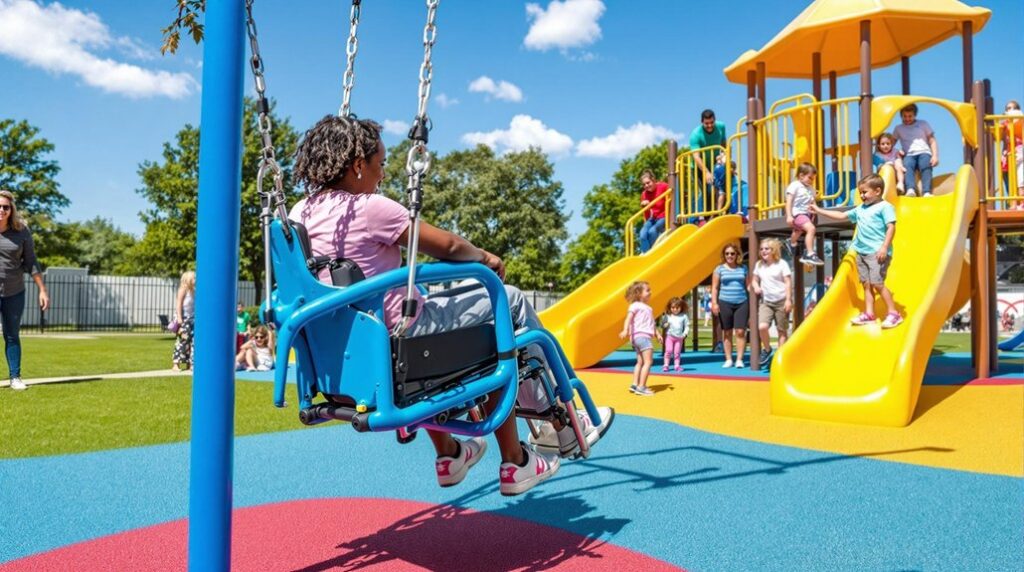
Wheelchair playground equipment is essential for creating inclusive play environments for children of all abilities. It features accessible gliders, ramps, and ground-level structures that facilitate participation. Safety standards demand compliance with ADA regulations, ensuring pathways and surfaces meet necessary dimensions for mobility. Diverse play options provide sensory engagement, enhancing cognitive development. Innovations like smart equipment and immersive technologies create engaging experiences while prioritizing safety. Understanding these elements will give you a thorough view of contemporary playground design.
Design and Features of Wheelchair Playground Equipment
When designing wheelchair playground equipment, it’s essential to prioritize inclusivity and accessibility, as these elements guarantee that all children can engage in play together. Inclusive equipment, such as accessible gliders and integrated play systems, allows everyone to enjoy the same structures. Ramps and rails facilitate wheelchair access to elevated areas, while transfer modules enable children to shift onto play structures easily. Ground-level features guarantee that all kids can participate, and wheelchair-accessible swings and seesaws promote interaction. Unified surfacing creates smooth navigation, while flexible layouts provide circulation space around high-use components. By incorporating integrated seating and sensory elements, designers can create engaging environments that support diverse abilities and foster social interaction among children. Furthermore, incorporating thermoplastic markings in the play area enhances safety and durability, ensuring a vibrant and welcoming space for all users.
Safety Standards for Accessible Playgrounds
Ensuring safety in accessible playgrounds involves adhering to specific standards that promote both inclusivity and security for all users. Accessible routes must be at least 60 inches wide, with a maximum slope of 1:20 leading to the play area. Within the play area, the cross slope should not exceed 1:48. Ground surfaces must comply with ASTM standards for impact absorption, ensuring safety during play. Furthermore, playground equipment needs to meet the 2010 ADA Standards, incorporating accessible play components and transfer stations for wheelchair users. Regular compliance audits and community feedback play essential roles in maintaining safety standards. By implementing these guidelines, you help create a playground environment that is secure and enjoyable for everyone.
Diverse Play Options for All Abilities
Diverse play options for all abilities are essential in creating inclusive playgrounds that cater to the needs of every child. By incorporating multi-sensory engagement, playgrounds can stimulate cognitive development through tactile and visual elements, while auditory components encourage cooperative play. Ground-level accessibility features, such as unrestricted pathways and zero-entry access, enhance mobility for all users. Collaborative play structures, including group spinners and wheelchair-friendly playhouses, foster social interaction and shared experiences. Additionally, independent play opportunities like sensory walls and adaptive swings allow children to explore at their own pace. Finally, these diverse options promote developmental skill building, from balance and spatial navigation to social-emotional growth and fine-motor refinement. Ultimately, inclusive playgrounds guarantee that every child can participate meaningfully in play. Furthermore, these playgrounds can be designed to include playground markings that enhance safety and organization, ensuring a secure environment for all children to enjoy.
Technological Innovations in Play Equipment
The integration of technological innovations in play equipment is revolutionizing the way children interact with playgrounds, enhancing play experiences for all abilities. Augmented Reality (AR) and Virtual Reality (VR) create immersive environments, allowing kids to engage in activities like virtual treasure hunts that promote cognitive skills. Smart play equipment, equipped with sensors, monitors conditions and adapts to individual preferences, ensuring a customized experience. Additionally, inclusive adaptive equipment, such as wheelchair-accessible swings and sensory-rich panels, fosters shared play among diverse users. These advancements not only improve safety through real-time alerts and data-driven insights but also encourage social interaction and collaboration. Ultimately, these technologies create dynamic play environments that are engaging, inclusive, and safe for every child.
Accessibility Trends in Playground Design
As communities increasingly recognize the importance of inclusivity, accessibility trends in playground design are evolving to meet the needs of all children, regardless of their abilities. Universal Design (UD) principles are gaining traction, going beyond ADA minimum standards to create engaging environments for various physical and cognitive abilities. Research shows that UD playgrounds attract 82% more users than those that only meet basic requirements, proving that inclusive spaces can be enjoyable for everyone. Features like unobstructed pathways, sensory-rich elements, and equipment designed for wheelchair access are becoming standard. This thoughtful approach not only fosters social interaction and empathy among children but also addresses misconceptions about the costs and benefits of inclusive playgrounds, making them more widely accepted in new projects.
Policy and Guidelines for Inclusive Play Spaces
While crafting inclusive play spaces for children, it’s essential to adhere to established policies and guidelines that promote accessibility and integration. The ADA outlines requirements for newly designed playgrounds, mandating a minimum pathway width of 36 inches, ideally 60 inches, to guarantee wheelchair users can navigate comfortably. Compliance involves not only physical access but also making information accessible for those with sensory impairments. Design principles emphasize equitable use, flexibility, and intuitive layouts, making sure play areas cater to diverse needs. Accessible pathways should connect distinct play zones, utilizing unitary surfacing for safety. Additionally, equipment must facilitate simultaneous play for children with and without disabilities, fostering social interactions and enhancing overall inclusivity in playground environments.