
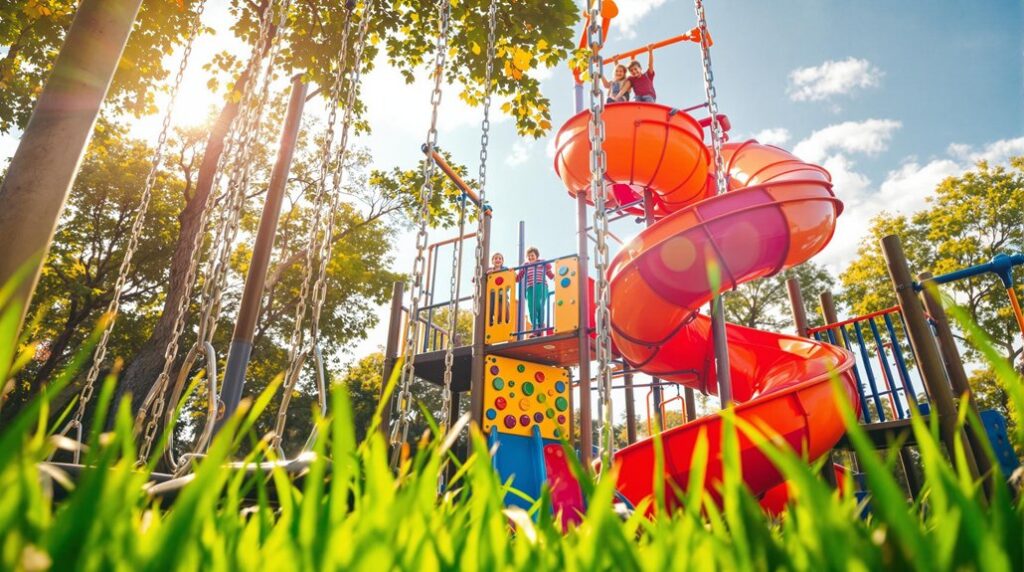
Popular playground equipment includes swings, slides, climbing structures, monkey bars, and seesaws, each providing unique developmental benefits. Swings enhance physical activity and social interaction, while slides promote emotional well-being through engaging play experiences. Climbing structures improve strength and coordination, and monkey bars build upper-body strength while encouraging cooperative play. Seesaws foster teamwork and balance. Each piece is designed with safety features, ensuring a secure play environment. You’ll find more insights into these essential components of child development in upcoming sections.
Swings
Swings are a fundamental component of playground equipment, offering both enjoyment and developmental benefits for children. Various types of swings cater to different age groups and needs, including traditional belt swings that enhance core muscle development and high-back baby swings providing essential neck support for toddlers. Tire swings facilitate dynamic movement, accommodating multiple users, while nest swings promote shared play experiences. Adaptive swings guarantee inclusivity, featuring secure harnesses and wider seats for children with disabilities. Safety features such as sturdy frames and soft landing materials are vital for minimizing injury risks. Regular maintenance is necessary to keep these swings functional and safe, ultimately supporting physical activity, social interaction, emotional growth, and cognitive development in children. Additionally, incorporating thermoplastic playground markings can enhance the play area by providing organized zones for various activities.
Slides
Playground slides are another iconic feature that enhances children’s outdoor play experiences, complementing swings and providing unique opportunities for physical activity and social interaction. Various slide designs, such as straight, curved, and wave slides, cater to different preferences and play styles. Polyethylene slides, known for their durability and weather resistance, often feature handrails for safe entry. Double or triple slides promote collaboration, while innovative options like spiral and tunnel slides add excitement. Safety considerations, including proper slide height, inclination, and surrounding padding, are crucial for injury prevention. Regular maintenance and professional installation guarantee longevity and safety. Ultimately, slides foster interpersonal skills, encourage physical activity, and contribute to children’s emotional well-being during playtime. Additionally, incorporating durable playground markings can enhance the overall play experience by providing structured environments that promote active learning and engagement.
Climbing Structures
Climbing structures serve as essential components of playground design, offering children a range of physical challenges that promote their development and engagement. Freestanding climbers provide flexibility, while net climbers are tailored for older users seeking varying difficulty levels. Quad and dome climbers encourage upper body strength and balance, and climbing walls present dynamic dexterity challenges. These structures improve hand-eye coordination, enhance strength, and foster creativity through imaginative play experiences. They cater to different age groups, with options for toddlers and older children alike, allowing for customization based on skill levels. Additionally, commercial suppliers offer extensive selections, ensuring that climbing structures can fit unique playground spaces, optimizing installation and promoting safety, thereby revitalizing play environments effectively. Furthermore, the use of durable thermoplastic materials in playground designs ensures longevity and resilience against heavy use.
Monkey Bars
Monkey bars stand out as a prominent feature in many playgrounds, offering a unique combination of physical and social benefits for children. They enhance upper-body strength through swinging and gripping actions while improving hand grip strength and promoting better posture. Engaging with monkey bars encourages flexibility and contributes to obesity reduction by fostering active play. Socially, they facilitate turn-taking and cooperative play, helping children build confidence as they master skills. Furthermore, maneuvering the bars stimulates mental focus and problem-solving abilities. Safety is paramount; recommendations suggest a minimum age of eight, with equipment constructed from high-quality galvanized steel, ensuring durability and stability. Proper design features, including height adjustability and load testing, further enhance safety and usability for varying child sizes.
Seesaws
Seesaws, a staple of outdoor play equipment, combine simple mechanics with engaging physical activity, making them a favorite among children. Typically consisting of a fulcrum, a plank, comfortable seats, and handles for grip, these structures utilize lever principles for effective play. Modern designs are crafted from durable materials like steel and plastic, ensuring safety and longevity. Seesaws come in various models, including traditional and spring-based types, accommodating different age groups and abilities. They foster teamwork, balance, and coordination, enhancing physical development. Innovations such as multi-seat models and integrated structures like the Rock N Cross provide dynamic play experiences. With safety features like rubber springs and soft surfaces, seesaws remain a classic choice in playgrounds, promoting social interaction among children.