
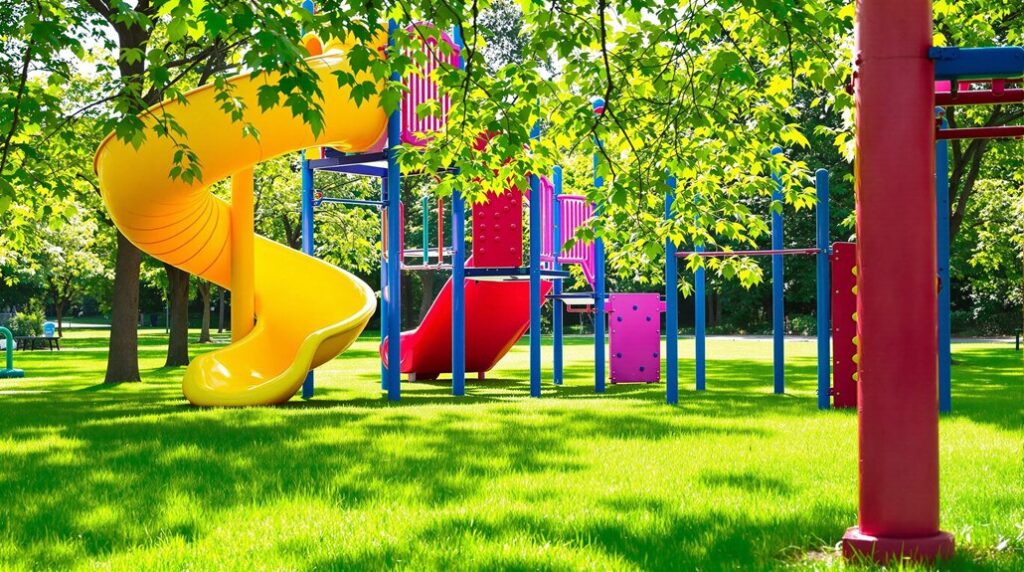
Freestanding playground equipment includes various structures like swing sets, slides, and climbers that encourage physical activity and imaginative play. Designed for diverse age groups and abilities, these installations promote coordination, balance, and cardiovascular fitness while guaranteeing safety compliance with standards. The flexibility of customization allows for adaptation to specific needs, and the durability of materials guarantees long-term usability. By exploring further, you’ll uncover the extensive benefits and considerations involved in selecting and installing such equipment.
Types of Freestanding Playground Equipment
Freestanding playground equipment encompasses a wide range of structures designed to promote physical activity and imaginative play among children. Common types include swing sets, which cater to various ages and abilities, and climbers featuring vertical walls and net climbers that challenge children’s coordination. Slides come in different heights and materials, while spinning equipment like carousels and merry-go-rounds adds dynamic movement to play. Seesaws, a classic choice, encourage balancing skills and social interaction. The diversity of designs allows for thematic elements, guaranteeing that equipment can blend seamlessly into different environments. Additionally, materials used assure safety and durability, making these structures a long-lasting investment for any playground, whether small or expansive. Customization options further enhance their appeal, meeting individual playground needs. Furthermore, incorporating thermoplastic materials in playground markings can enhance play experiences and promote learning opportunities.
Physical Development Benefits of Freestanding Equipment
Engaging with playground equipment markedly contributes to children’s physical development, offering numerous benefits that extend beyond mere play. Freestanding structures like climbers and swings enhance muscle strength and endurance, fostering bone density through weight-bearing activities. Regular use strengthens gross motor skills, improving coordination, balance, and spatial awareness. As children navigate these structures, they develop agility and speed, which are essential for overall physical stamina. Additionally, active play increases cardiovascular fitness, raising heart rates and boosting aerobic capacity. This not only supports energy levels but also reduces stress. Moreover, engaging with playground equipment promotes flexibility and mobility, helping prevent injuries in sports and daily activities. Overall, consistent interaction with these structures lays a foundation for lifelong health and fitness habits, while incorporating durable playground markings can further enhance the play experience by providing structured environments for active engagement.
Cognitive Development Advantages
While children play on various structures, they simultaneously engage in cognitive development, enhancing critical thinking and problem-solving skills. Freestanding equipment presents physical challenges that require strategic decision-making, prompting kids to plan and adapt in dynamic environments. For instance, climbing walls stimulate spatial awareness, while spinners and carousels introduce cause-and-effect relationships, reinforcing basic physics understanding. Themed play structures, like pirate ships, encourage imaginative storytelling, fostering creativity and empathy. Additionally, maneuvering stepping stones or balance beams helps develop problem-solving abilities through physical navigation. These experiences promote cognitive flexibility, allowing children to experiment with different scenarios and outcomes, ultimately enriching their cognitive competencies and preparing them for real-life challenges. Furthermore, integrating playground markings into play areas enhances learning and reinforces academic concepts through engaging outdoor experiences.
Enhancing Social Skills Through Play
Play provides a powerful platform for children to enhance their social skills, fostering teamwork, communication, and emotional intelligence. Freestanding playground equipment encourages active engagement, promoting cooperation among peers during play activities. Structured settings help children learn rules and boundaries, crucial for social interactions. Emotional intelligence develops as kids navigate feelings like frustration or excitement. Additionally, older children often model positive behaviors, creating an inclusive community. Equipment that requires turn-taking cultivates patience and respect for others, while cooperative play teaches empathy and conflict resolution. Diverse play experiences, facilitated by various equipment, enhance networking opportunities and group dynamics. Overall, freestanding playgrounds are essential for developing fundamental social skills that contribute to children’s overall growth and well-being.
Stimulation of Imaginative Play
Freestanding playground equipment serves as a catalyst for stimulating imaginative play, enabling children to engage in creative scenarios that enhance cognitive and social development. With open layouts, children can explore freely, fostering creativity in their play. Equipment designed with variable heights encourages imaginative navigation, while themed components, like pirate ships or castles, provide a structured framework for role-play. Interactive elements, such as musical instruments or sensory panels, further stimulate creativity and exploration. Additionally, using natural materials connects children to their environment, enriching their play experience. Structures that incorporate movable parts and varied textures enhance problem-solving skills and spatial awareness, allowing for a diverse range of imaginative activities that promote overall cognitive growth. Furthermore, the use of child safe thermoplastic ensures that these play structures are not only engaging but also safe for children during play.
Installation Considerations for Freestanding Structures
When you consider installing freestanding playground structures, it is essential to prioritize various factors that guarantee safety and longevity. Begin with surface anchoring; for dirt or grass, corkscrew anchors offer optimal hold, while concrete footings are necessary for permanent installations. Verify a 6-foot perimeter between equipment and obstacles, adhering to CPSC standards for fall zones. Use galvanized hardware to prevent corrosion and consider adjustable brackets for composite materials. Regular inspections are critical, including monthly torque checks and monitoring for ground heave. Be aware of local regulations, such as frost line depths for concrete, and verify compliance with ASTM F1487 standards to validate warranties and maintain safety. Prioritizing these considerations will enhance the overall effectiveness of your playground installation.
Durability and Maintenance of Playground Equipment
Durability and maintenance are critical components in ensuring the safety and longevity of playground equipment. Materials like galvanized steel and stainless steel can last over 50 years with proper care, while treated wood and UV-resistant plastics require regular attention to prevent decay and fading. Conducting annual inspections helps identify structural wear and rust, while cleaning protocols maintain surface integrity. Lubricating moving parts, reapplying protective coatings, and addressing damage promptly are essential maintenance practices. Environmental factors, such as humidity and UV exposure, can accelerate wear, particularly in high-traffic areas. By understanding these aspects and adhering to maintenance schedules, you can greatly extend the lifespan of your playground equipment, ensuring a safe and enjoyable experience for all users. Additionally, incorporating thermoplastic playground markings can enhance the play environment while providing a durable and low-maintenance surface solution.
Cost-Effectiveness of Freestanding Options
Cost-effectiveness is an essential factor to contemplate when selecting playground equipment, as it directly impacts your budget and long-term planning. Freestanding playground options are often more budget-friendly, making them ideal for those with limited funds. They allow for gradual expansion or renovation without significant financial strain. Typical commercial playground budgets range from $40,000 to $100,000, but freestanding equipment enables you to manage costs efficiently by starting with basic components and adding later. Additionally, purchasing from reputable suppliers guarantees compliance with safety standards and often includes warranties for peace of mind. Choosing engineered wood fiber as a surfacing option can further enhance cost-effectiveness, while professional installation minimizes risks and upholds safety compliance, guaranteeing an enjoyable environment for children.
Flexibility in Playground Design
Flexibility in playground design is essential for creating spaces that cater to diverse needs and abilities, as it allows for a more inclusive play environment. By incorporating features suitable for various ages and skill levels, you guarantee that every child can engage meaningfully. Flexible designs, such as adjustable heights for interactive instruments or adaptable layouts like bike tracks, enhance motor skills and cognitive development. Loose parts play encourages creativity, allowing children to manipulate everyday items into imaginative structures. Additionally, including elements that promote exploration, like hidden features or textured surfaces, keeps play engaging. Overall, adaptability in equipment and design guarantees that playgrounds can evolve based on user feedback, continuously meeting the diverse preferences of all children.
Safety and Anchoring Solutions
When designing playgrounds, ensuring safety through proper anchoring solutions is essential for preventing accidents and injuries. Regular inspections to identify hazards, such as sharp edges or loose parts, must be conducted. The playground surface should meet safety standards, utilizing materials like wood chips or mulch, ensuring a depth of at least 12 inches. Equipment needs to be appropriately spaced to avoid collisions, and gaps between components should adhere to entrapment guidelines. Certified professionals should install structures, ensuring they are anchored securely to stable ground to prevent shifting. It’s vital to use durable materials for anchoring, and regular inspections are necessary to maintain compliance with safety standards, ultimately creating a safer environment for all users. Additionally, the use of high-quality thermoplastic materials in playground markings can enhance visibility and safety for children at play.