
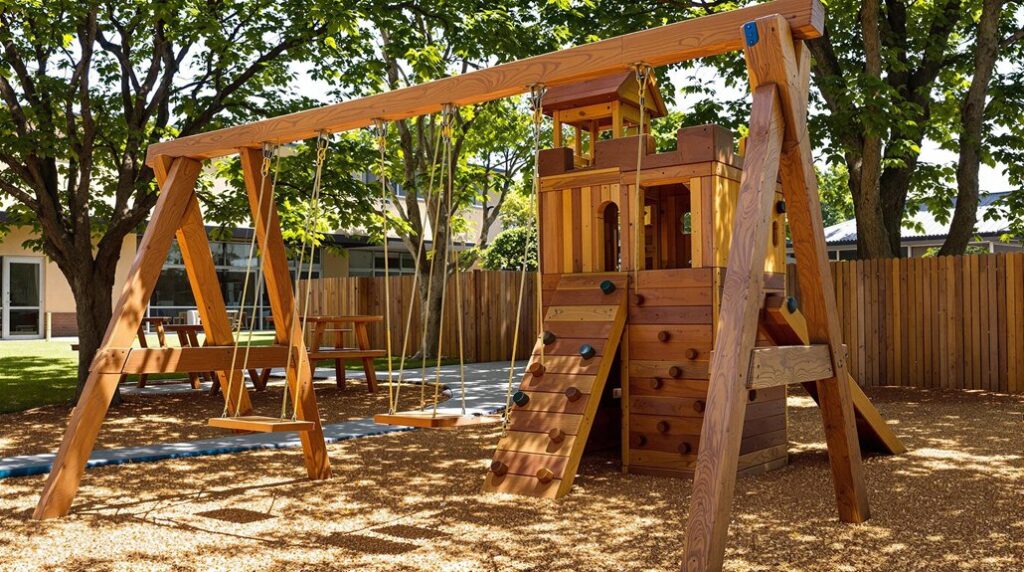
Wooden playground equipment for schools enhances children’s physical, cognitive, and social development effectively. Engaging with structures like climbing walls improves strength and coordination, while interactive elements foster problem-solving and creativity. Such equipment supports emotional intelligence, helping kids navigate social dynamics through play. Additionally, wooden materials blend seamlessly with natural environments and prioritize safety through design. Implementing inclusive playgrounds guarantees access for all abilities, enriching the overall educational experience, and contributing to a well-rounded curriculum. You’ll uncover further insights ahead.
Physical Development Benefits of Wooden Playground Equipment
While many playgrounds offer a variety of equipment, wooden playground structures specifically promote substantial physical development benefits for children. These structures, featuring components like climbing walls and balance beams, facilitate strength building and coordination improvements. By maneuvering rope bridges, kids refine their balance and stability, while engaging with obstacles enhances agility and flexibility. Open spaces encourage activities like running and chasing, boosting cardiovascular fitness and gross motor skills. Climbing and crawling on wooden equipment develop essential arm and leg strength. Features such as monkey bars and swings promote upper body coordination and spatial awareness. Overall, wooden playgrounds provide diverse physical challenges that markedly contribute to children’s gross motor skill enhancement, making them a key component of child development in school settings. Additionally, the incorporation of playground markings can further enhance these physical activities by providing structured play zones and interactive games.
Cognitive and Educational Advantages
As children engage with wooden playground equipment, they not only experience physical challenges but also enhance their cognitive and educational skills. Maneuvering complex structures improves problem-solving abilities, while planning climbing routes fosters strategic thinking. This active play encourages quick decision-making and imaginative scenarios, boosting creativity. Additionally, interactive experiences promote focus and attention spans, directly benefiting academic performance. Children learn cooperatively, which enhances teamwork and social learning. The equipment also integrates educational components, such as puzzles, to stimulate curiosity and logical reasoning. By offering diverse sensory experiences, these playgrounds create a safe environment that nurtures self-directed learning and spatial awareness. Overall, wooden playground equipment proves to be an innovative tool for cognitive development in educational settings. Furthermore, the incorporation of thermoplastic playground markings can enhance these play experiences by providing structured environments that promote active learning and engagement.
Social and Emotional Growth Through Play
Engaging in play on wooden playground equipment greatly contributes to children’s social and emotional growth, fostering essential skills that extend beyond the playground. As children interact during group activities, they develop friendships and learn to navigate complex social dynamics, including empathy, negotiation, and conflict resolution. Playgrounds serve as inclusive environments, allowing children from diverse backgrounds to connect, enhancing social cohesion. The emotional intelligence gained through play helps kids manage their feelings, promoting better mental health and improved academic performance. Moreover, these interactions teach conflict resolution skills that are crucial for adult relationships. Overall, structured and unstructured play environments greatly enhance children’s social-emotional skills, preparing them for future challenges in both personal and professional contexts.
Environmental and Aesthetic Benefits
When considering playground equipment, the environmental and aesthetic benefits of wooden structures become increasingly apparent. Wood serves as a carbon sink, absorbing CO₂ during its growth, and retains this carbon when used in construction. Unlike non-biodegradable materials, wood decomposes naturally, reducing landfill waste. Additionally, sustainably sourced wood is harvested from responsibly managed forests, ensuring ecological balance. Aesthetically, wooden playgrounds integrate seamlessly with outdoor environments, enhancing visual harmony. The warm texture of wood contrasts with synthetic materials, providing a more inviting play surface. Furthermore, its design versatility allows for unique, nature-inspired structures that stimulate children’s senses. Overall, wooden playground equipment not only supports environmental sustainability but also enriches the aesthetic quality of schoolyards and parks.
Safety Features of Wooden Play Structures
Ensuring the safety of wooden play structures involves a thorough approach that addresses material selection, structural integrity, and accident prevention measures. You should choose untreated or arsenic-free pressure-treated wood to minimize health risks. Sanded surfaces and rounded edges prevent splinters, while corrosion-resistant bolts and screws guarantee secure fastening. Regular inspections are essential to check for signs of wear, ensuring that all components remain tightened and safe. Positioning swings individually and installing barriers on elevated platforms can considerably reduce the risk of accidents. Additionally, utilizing safety-tested materials like mats or loose-fill under play areas provides necessary impact cushioning. By adhering to these safety features, you create a secure environment where children can play actively and confidently.
Long-Term Value and Durability
Wooden playground equipment offers remarkable long-term value and durability, making it an ideal choice for schools looking to invest wisely in recreational facilities. The natural strength of wood supports complex structures like climbing frames, ensuring safety and functionality over time. When properly treated, wood can last for decades, presenting a cost-effective investment with minimal maintenance costs. High-quality, weatherproofed timber effectively withstands various weather conditions, while regular inspections and re-sealing prevent rot and damage. Additionally, wooden structures are eco-friendly, sourced from renewable resources that reduce carbon footprints. By opting for durable wooden equipment, schools can save on replacement costs, ensuring students enjoy these facilities for years without significant financial outlays for new installations.
Enhancing Curriculum With Outdoor Learning
Outdoor learning environments greatly enhance curriculum delivery by providing dynamic spaces where students can engage with the material in hands-on ways. These outdoor classrooms can be tailored to various subjects, allowing students to explore ecosystems, conduct environmental experiments, and participate in gardening or wildlife observation. Such sensory-rich experiences stimulate curiosity and improve focus, leading to significant gains in academic performance, including science test scores rising by up to 27%. Furthermore, outdoor learning supports diverse learning styles, particularly benefiting students with special needs or ADHD. By incorporating physical activity and real-world applications, outdoor education not only boosts engagement but also fosters environmental awareness, promoting stewardship and sustainability among students. Ultimately, these experiences enrich the educational process, making learning more impactful. Additionally, integrating features like thermoplastic playground markings can enhance outdoor play by creating structured activity zones that promote organized sports and collaborative play.
Community Engagement and Parental Involvement
The integration of community engagement and parental involvement plays a significant role in maximizing the benefits of playground facilities in schools. Organizing workshops and meetings allows you to gather valuable feedback for effective playground design and management. Volunteer opportunities for parents and community members enhance participation in construction and maintenance, fostering a sense of ownership. Hosting school events encourages community use and appreciation of playgrounds. Establishing feedback mechanisms, including social media platforms, helps you maintain ongoing communication with parents. Engaging Parent-Teacher Associations in decision-making guarantees that their insights shape playground initiatives. By identifying stakeholders and conducting needs assessments, you can effectively allocate resources and strengthen community bonds, ultimately leading to increased usage and satisfaction with playground facilities.
Inclusive Design for All Abilities
Creating an inclusive playground environment is essential for fostering play opportunities for all children, regardless of their abilities. By integrating accessibility features like ramps and transfer stations, you create a seamless experience that encourages participation. Ground-level play options, such as sensory panels and tactile paths, engage users with limited mobility effectively. Multi-sensory elements, including auditory chimes and textured surfaces, cater to neurodivergent children and those with sensory processing needs. Additionally, wheelchair-accessible routes guarantee all play zones are interconnected, eliminating segregated spaces. Incorporating adaptive equipment, like inclusive swing seats and rotating platforms, promotes motor skill development while allowing dynamic movement. This thoughtful design enhances social interactions, enabling collaborative play and fostering a sense of belonging among all children.
Thematic Play Areas for Enhanced Learning
While many playgrounds focus solely on physical activity, thematic play areas enhance learning by immersing children in environments that stimulate their imagination and curiosity. These areas foster enhanced creativity, enabling students to engage in explorative scenarios that promote exploration-based learning. By providing a narrative thread, thematic units bind various activities together, giving students a clear sense of purpose. This approach not only enhances cognitive skills but also supports integration with the curriculum across multiple subjects. Themed play encourages physical development, social-emotional growth, and boosts engagement and motivation. In addition, immersive environments like ocean adventures or jungle explorations help children retain information better, contributing to holistic development through interconnected learning centers tailored to diverse learning styles.