
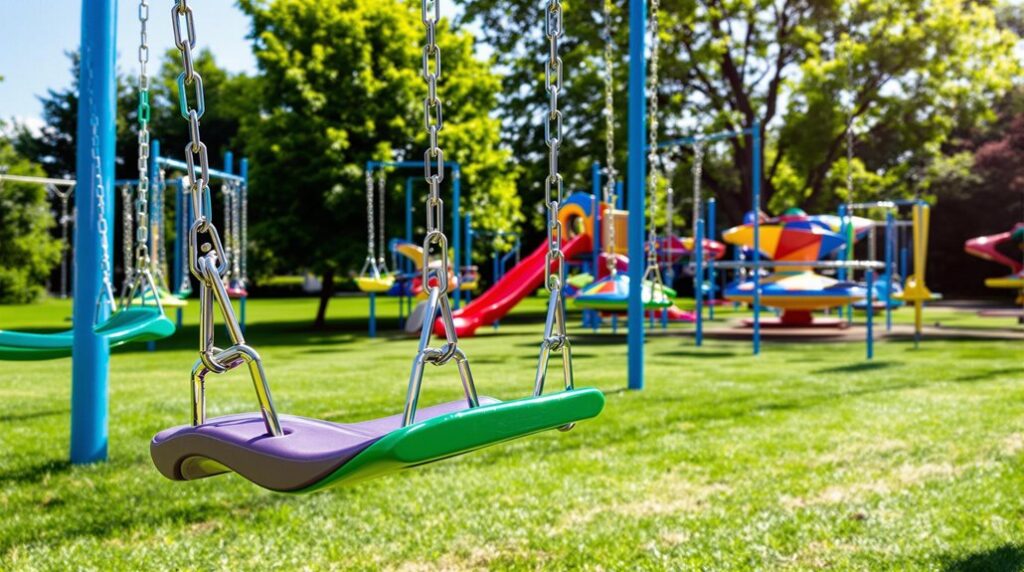
Moveable playground equipment greatly increases children’s physical activity and enhances social interactions through versatile play styles. This equipment includes spin-based systems, transportable units, and inclusive designs that cater to children of all abilities. Benefits include improved motor skills and reduced injury risks, while manufacturers focus on durability and safety. Thoughtful integration into playground design is essential to maximize engagement. Understanding these factors will provide you with a deeper insight into the importance of moveable playground equipment for child development.
Types of Moveable Playground Equipment
When considering the types of moveable playground equipment, it’s vital to understand how each category contributes to children’s physical development and social interaction. Spin-based equipment, like Whirl and Twirl spinners and tornado spinners, enhances spatial awareness and encourages teamwork. Motion-based systems, including teeter-totters and rocker boards, promote balance and cooperative play. Transportable play units, such as modular climbers and portable slides, offer versatile configurations for different play environments. Inclusive motion components, like wheelchair-accessible spinners and adaptive rockers, guarantee all children can participate. Finally, developmental features, including balance beams and kinetic sand stations, facilitate physical challenges while fostering social engagement. Each category plays an important role in creating dynamic and inclusive play experiences for children, enhancing their outdoor playtime with durable playground markings.
Benefits of Moveable Equipment
Moveable playground equipment offers a range of benefits that enhance children’s play experiences and promote overall well-being. It increases physical activity levels, countering sedentary behavior while fostering motor skill development through diverse play opportunities. This flexibility allows for varying activity levels tailored to individual children’s capacities. Financially, portable equipment is more cost-effective to purchase and maintain, reducing injury risks due to adaptable play settings. Additionally, its easy installation and relocation accommodate different environments, optimizing space usage effectively. Cognitively, it encourages creative play and social interactions, essential for emotional development. Ultimately, moveable equipment can engage communities by attracting families and providing customizable, safe play areas that adapt to various needs, ensuring accessibility for all children. Furthermore, incorporating thermoplastic playground markings enhances the safety and organization of play areas, guiding children through structured activities.
Common Manufacturers
The landscape of moveable playground equipment is shaped by several key manufacturers that specialize in innovative designs and versatile solutions. Adventure Playground Systems leads the commercial sector with over 20 years of experience, focusing on freestanding spin and motion equipment, including accessible designs for children with special needs. Bijou Build offers portable equipment with easy setup, emphasizing aesthetic modular designs for schools. KOMPAN, a global player with 50+ years of expertise, provides themed playgrounds and outdoor fitness equipment. Kaplan Early Learning Company collaborates with educators to create age-appropriate layouts for schools, prioritizing durability. Miracle Recreation, an industry leader since 1927, customizes inclusive play stations, catering to diverse abilities and expanding into shade structures and fitness gear.
Safety Considerations
Ensuring safety in moveable playground equipment is essential for preventing accidents and injuries among children. Proper materials should be used; for instance, swings must be made from soft materials like rubber or plastic. Children should always sit securely in swings, holding on with both hands, and must stop completely before dismounting. Maintaining a safe distance from others on moving equipment and enforcing a single-rider policy for swings enhances safety. Adult supervision is vital to enforce these rules. Additionally, equipment should be isolated from other structures, ensuring a minimum distance of 12 feet between play areas. Regular inspections, debris removal, and appropriate fall zones further contribute to a safer playground environment, reducing risks associated with moving equipment.
Integration in Playground Design
While integrating moveable playground equipment into design, it is crucial to recognize its potential to create adaptable play environments that meet diverse community needs. This versatility allows for easy reconfiguration, catering to different age groups and preferences. Moveable installations engage communities at various locations, enhancing accessibility and inclusivity. Additionally, these setups can be employed for special events, providing unique play opportunities that would otherwise be unavailable. Incorporating innovative elements stimulates creative playground designs, fostering interactive experiences. Furthermore, deploying moveable equipment tends to be cost-effective, reducing expenses compared to permanent structures. By prioritizing these features, you can develop playgrounds that not only serve immediate play needs but also adapt to evolving community dynamics and preferences over time. The use of durable thermoplastic materials ensures that moveable equipment can withstand heavy use, making it a practical choice for busy playgrounds.
Durability and Maintenance
Durability and maintenance of moveable playground equipment are critical aspects that can greatly affect its lifespan and performance. The materials you select, like UV-resistant plastics and powder-coated metals, markedly influence durability. Regular inspections are essential; conduct monthly checks for cracks, rust, and overall structural integrity. Address any issues immediately, such as replacing frayed ropes or damaged anchor points. Lubricating moving parts per manufacturer guidelines and cleaning with mild soap can prevent wear. Additionally, consider that swing chains last 2-5 years, while plastic slides may show UV damage within 8-10 years. Equipment exceeding ten years without safety upgrades or showing signs of irreparable damage should be replaced to guarantee safety and compliance with current standards.
Accessibility in Playground Equipment
Accessibility in playground equipment is vital for fostering an inclusive environment where all children can engage in play. Inclusive playgrounds feature accessible equipment, such as wheelchair-accessible structures and ground-level activities, which allow children with disabilities to participate fully. Proper surfacing, like rubber or pour-in-place materials, guarantees safety and mobility. By incorporating varied activities, including sensory and social play options, these spaces cater to diverse interests and abilities. Compliance with inclusivity standards, like the ADA, is essential for creating equitable playgrounds. Community support for accessible playgrounds is strong, with over 90% of parents advocating for equipment accommodating various abilities. By prioritizing accessibility, we can enhance physical activity, social interaction, and overall well-being for all children. Additionally, utilizing child safe thermoplastic for playground markings ensures durability and safety in these inclusive spaces.
Innovative Play Styles
Innovative play styles have transformed playgrounds into dynamic environments that cater to children’s diverse interests and developmental needs. The wide array of play equipment attracts various ages and abilities, enhancing engagement and retention. Themed playgrounds, simulating adventures like pirate hunts, stimulate imagination and encourage role-play, fostering experiential learning. Structures such as tube slides and net climbers offer exciting physical challenges, promoting strength and social play among children aged 5 to 12. Additionally, combining multiple play styles, like climbing and spinning, creates versatile environments that sustain interest. This diversity not only maximizes space use but also supports active group interaction, making innovative playgrounds essential for promoting health, fitness, and enjoyable outdoor activity, while continuously evolving to meet children’s needs. Furthermore, high-quality thermoplastic materials used in playground markings ensure durability and vibrant designs, enhancing the overall play experience.
Promoting Social Interaction Through Play
As children engage in play, the design of playground equipment and spaces greatly influences their social interactions. A variety of equipment encourages different play styles, fostering opportunities for both structured and unstructured interactions. For example, spring riders promote teamwork and empathy through turn-taking activities. Spaces designed for brief stops can enhance peer engagement, while innovative features like bubble machines draw children together. Collaborative play in sandboxes or climbing structures encourages problem-solving and mutual support among peers. Additionally, ensuring accessibility allows diverse groups to interact, enriching the social experience. Overall, thoughtful design elements in playgrounds not only enhance physical activity but also create environments where children can thrive socially, developing essential skills for future interactions. Furthermore, incorporating playground markings can transform plain areas into vibrant spaces that promote active engagement and learning opportunities.