
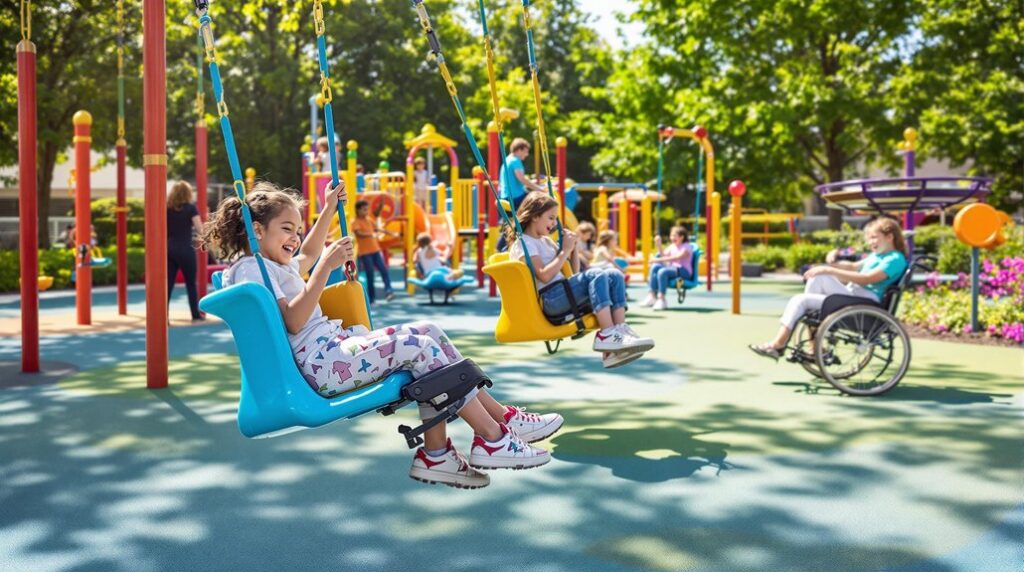
All inclusive playground equipment is specifically designed to engage children of all abilities by incorporating features that enhance mobility, sensory exploration, and social interaction. You’ll find ramps, wide decks, and adaptive structures ensuring wheelchair access, along with sensory play elements like auditory instruments and tactile surfaces. Safety is paramount, with compliant surfacing and clear zones around equipment. These designs promote collaboration and cognitive growth, making various developmental benefits accessible to everyone. Uncover more about the range of options available.
Principles of Inclusive Design
When designing playground equipment, it’s vital to adhere to the principles of inclusive design, ensuring that all children can engage in play regardless of their abilities. This approach guarantees that equipment caters to a diverse range of physical and cognitive abilities, providing opportunities for essential skill development. By incorporating features that support sensory and physical play, you create an environment where every child can participate fully. Additionally, flexible designs accommodate various user preferences, allowing for both individual and group activities that maintain engagement. Clear organization and intuitive navigation help reduce confusion, particularly for children with different needs. Ultimately, inclusive design fosters an enriching play experience, promoting social interaction and ensuring that all children feel valued and included. Moreover, integrating thermoplastic playground markings can further enhance play areas by providing structured zones for activities that accommodate diverse play styles.
Mobility-Friendly Features
Inclusive design principles set the stage for incorporating mobility-friendly features in playground equipment, guaranteeing that all children can participate in play regardless of their physical capabilities. Key elements include ramps and wide decks, which facilitate wheelchair access, allowing easy navigation throughout the playground. Equipment like wheelchair-accessible gliders and adaptive play structures, such as roller tables, guarantee engaging experiences for children with mobility impairments. Transfer points simplify movement between various play areas, while safety surfacing materials assure secure access for mobility devices. Compliance with ADA standards reinforces the commitment to accessibility. Overall, these features create an inclusive environment, fostering interaction and play among children of differing abilities, thereby promoting a sense of community and belonging. Additionally, implementing durable thermoplastic materials ensures that the playground equipment withstands heavy use and remains safe for all users over time.
Sensory Play Elements
Sensory play elements are essential to creating an enriching playground experience that engages all children, regardless of their abilities. By incorporating equipment that stimulates sight, touch, hearing, and vestibular senses, you guarantee a diverse play experience that caters to everyone. For visual stimulation, colorful equipment and activity panels enhance cognitive engagement. Auditory play, featuring musical instruments and sound exploration tools like talk tubes, fosters communication and listening skills. Tactile and vestibular elements, such as various textures and climbing structures, promote physical interaction and sensory exploration. Safety features are vital, guaranteeing these elements are securely installed and easily maintained, allowing children to explore freely while minimizing risks. Integrating natural elements further harmonizes the playground with its surroundings, enriching the overall sensory experience. Additionally, playground markings can enhance sensory play by providing engaging pathways and interactive games that encourage exploration and movement.
Social Interaction Catalysts
Social interaction catalysts in playgrounds play an important role in fostering relationships among children, as they encourage cooperation and teamwork through shared activities. Equipment like seesaws and multi-person swings promote trust and patience, allowing kids to learn valuable social skills. Large climbing structures challenge children to problem-solve together, while tug-of-war ropes build team spirit by requiring collective effort. Parachute games enhance collaboration and decision-making, creating an environment rich in communication opportunities. Furthermore, buddy benches facilitate conflict resolution, providing a supportive space for discussing disagreements. All-inclusive playground designs guarantee every child can participate, promoting empathy and understanding, which contribute to lasting friendships. Ultimately, these social interaction catalysts are crucial for developing interpersonal skills essential for children’s growth. Additionally, incorporating durable playground markings can create engaging environments that further enhance social interaction and active play among children.
Age-Inclusive Structures
As children grow and develop, their play needs change, necessitating playground structures that cater to varying age groups. Infant and toddler areas should feature low-level structures, promoting sensory exploration and motor skill development. In contrast, preschool play areas introduce greater challenges for social and physical growth. For school-age children, equipment like climbers and ziplines offer advanced physical challenges. Teen and pre-teen areas require fitness circuits and ninja warrior courses to engage older users. Designing inclusive structures can either combine or separate these play zones based on age. Separate areas enhance safety and supervision, while combined structures maximize space and cost efficiency, ensuring that children of all ages can play together, fostering interaction and community engagement.
Safety and Accessibility Standards
When designing playgrounds, safety and accessibility standards play an essential role in guaranteeing that all children can enjoy their play environment without risk of injury. Playground surfaces must absorb falls effectively, using stable, slip-resistant materials to accommodate diverse mobility needs. It’s crucial to maintain clear zones of at least 6 feet around equipment to prevent collisions. Structural safety requires equipment not exceeding 8 feet in height and includes guardrails to mitigate fall risks. At least 50% of play components should be accessible, with routes wide enough for wheelchairs. Regular inspections guarantee compliance with safety standards, while clear signage informs users of age-appropriate zones. Together, these standards foster an inclusive and secure space for all children. Additionally, using child safe thermoplastic for playground markings enhances safety during play with slip-resistant features.
Benefits of All Inclusive Playgrounds
All-inclusive playgrounds offer numerous benefits that extend beyond mere recreational opportunities. They enhance cognitive development by providing diverse play experiences that promote problem-solving skills and critical thinking. Children interact with peers from various backgrounds, fostering social learning and empathy. Emotionally, these playgrounds build confidence and a positive self-identity while reducing isolation for children with disabilities. Physically, they encourage increased activity and improve motor skills through adaptive equipment, promoting overall health. Socially, inclusive playgrounds help develop essential skills like communication and conflict resolution, while also nurturing respect and empathy among children. Ultimately, they create a sense of community, ensuring that all children can participate fully and enjoy the benefits of play together.
Examples of Inclusive Playground Equipment
Inclusive playground equipment is designed to cater to children of all abilities, guaranteeing that everyone can participate in play activities. For instance, wheelchair accessible playstructures allow children with mobility challenges to engage freely without leaving their wheelchairs. Communication play equipment fosters language skills through cooperative play, while musical play equipment encourages creativity across all developmental stages. Sensory stations enhance exploration with tactile and auditory experiences, making play more engaging. Additionally, features like the universal carousel and expression swing promote social interactions by accommodating both children with and without disabilities. Ramped slides and transfer stations guarantee that users shift safely between mobility devices and equipment. These examples illustrate how inclusive playgrounds provide equitable play opportunities for every child.