
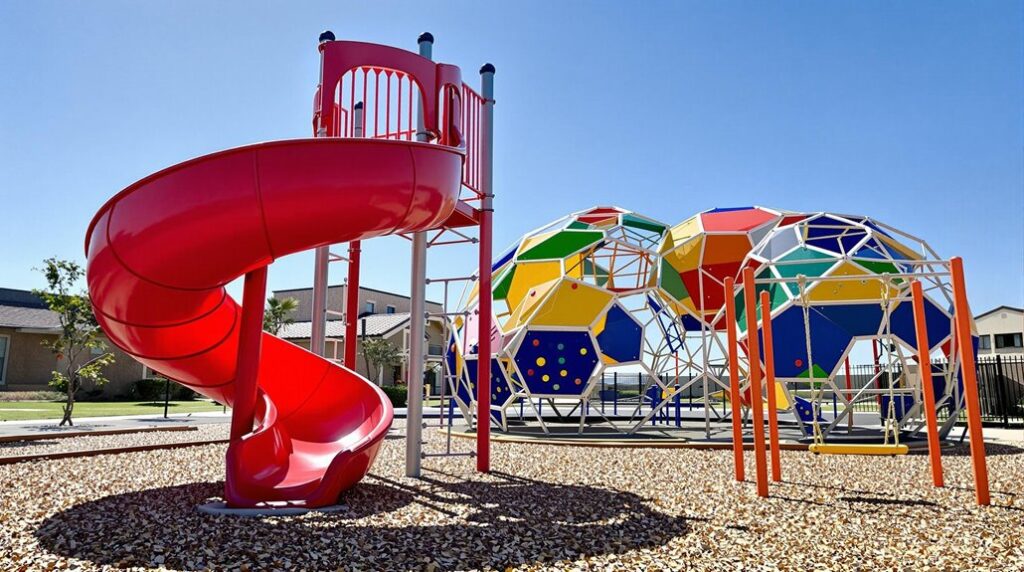
Modern playgrounds combine traditional equipment with innovative design elements to create dynamic spaces for childhood development. These environments incorporate safety features, inclusive accessibility, and age-appropriate zones that foster physical, social, and cognitive growth through active play. From classic structures like swings and climbing frames to specialized surfaces with playground markings, these spaces promote essential skills while supporting overall health. Exploring these thoughtfully designed environments reveals how they shape the next generation's well-being.
The Magic of Outdoor Play Spaces
While modern technology increasingly dominates children's leisure time, outdoor playgrounds remain essential sanctuaries where the fundamental elements of childhood development naturally converge.
These dynamic spaces foster vital physical, social, and cognitive growth through various equipment and activities designed for different age groups and abilities. Traditional playground features, from climbing structures to swings, create opportunities for children to develop motor skills, build strength, and enhance coordination.
The thoughtfully designed environments incorporate safety measures while encouraging exploration, ensuring that children can engage in beneficial active play that supports their overall development and well-being.
Essential Features of Modern Playgrounds
Modern playgrounds incorporate essential design elements that prioritize safety, accessibility, and developmental benefits for children of all ages and abilities.
These spaces feature impact-absorbing surfaces, age-appropriate equipment zones, and inclusive designs that accommodate various physical capabilities. Thoughtfully placed playground markings facilitate structured activities while promoting spontaneous play.
Critical components include climbing structures for motor development, quiet areas for sensory breaks, and interactive elements that encourage social interaction.
The integration of nature-inspired features, coupled with traditional playground equipment, creates a thorough environment that supports physical activity, cognitive growth, and emotional well-being through purposeful design.
Popular Games That Shape Active Children
Traditional playground games serve as fundamental building blocks in children's physical and social development, offering structured opportunities for exercise while fostering essential life skills. These time-tested activities enhance coordination, strength, and cardiovascular health through engaging movement patterns.
| Game Type | Benefits |
|---|---|
| Tag Games | Agility and spatial awareness |
| Hopscotch | Balance and coordination |
| Jump Rope | Cardiovascular fitness |
| British Bulldogs | Strength and strategy |
| Ball Games | Hand-eye coordination |
Research indicates that children who regularly participate in these structured playground activities demonstrate improved motor skills, social competence, and problem-solving abilities, contributing to their overall development and well-being.
Creating Inclusive Play Environments
Building upon the foundation of active games, the development of inclusive play environments represents a fundamental shift in playground design philosophy.
Modern playgrounds integrate accessibility features and universal design principles to guarantee equitable participation for all children.
- Tactile paths and braille signage support children with visual impairments
- Wide, smooth surfaces accommodate mobility devices
- Multi-sensory play elements engage diverse learning styles
- Ground-level activities guarantee participation regardless of physical ability
These design elements, combined with thoughtful playground markings and specialized equipment, create spaces where children of all abilities can interact, learn, and develop essential social skills through collaborative play experiences.
Health Benefits of Playground Activities
When children engage in playground activities, they access a thorough array of health benefits that extend far beyond mere physical exercise. Through dynamic movements like climbing, swinging, and running, children develop essential motor skills while improving cardiovascular health and muscular strength.
Regular playground participation contributes to enhanced balance, coordination, and spatial awareness, fundamental elements for proper physical development.
Furthermore, these activities stimulate cognitive functions through problem-solving scenarios and social interactions, while releasing endorphins that promote emotional well-being.
Research indicates that consistent playground engagement helps maintain healthy body weight, reduces stress levels, and establishes positive, lifelong fitness habits.
The Role of Visual Playground Markings
Visual playground markings serve as essential components in modern play spaces, transforming ordinary surfaces into interactive zones that encourage physical activity and learning through play.
These markings facilitate structured activities while promoting inclusive engagement for children of all abilities.
- Mathematical grids and number sequences enhance cognitive development
- Directional paths and movement patterns improve motor coordination
- Game-specific markings support organized physical activities
- Educational symbols foster both academic learning and creative expression
The strategic implementation of playground markings creates an environment where children naturally gravitate toward active participation.
This supports their physical development while simultaneously enriching their educational experience through purposeful design elements.
Building Community Through Play Spaces
Modern playgrounds extend far beyond their physical structures, serving as crucial community hubs where social bonds flourish and neighborhood connections strengthen.
Through organized events, volunteer maintenance programs, and educational activities, these spaces foster meaningful engagement among residents of all ages and backgrounds.
Local partnerships between schools, community organizations, and parks departments create sustainable frameworks for playground development and maintenance.
These collaborations facilitate inclusive design practices, ensuring that play spaces accommodate children with diverse abilities while providing resources for parents and caregivers.
Regular community feedback sessions and responsive management strategies help maintain these significant spaces as centerpieces of neighborhood interaction.
Frequently Asked Questions
What's the Ideal Age to Start Taking Children to Public Playgrounds?
Children can safely visit playgrounds when they can sit independently, typically around 6 months, with close supervision. Structured playground activities become more beneficial between ages 1-2 years.
How Can Parents Help Anxious Children Feel More Comfortable on Playgrounds?
Like medieval knights facing their first tournament, anxious children need gradual exposure, parental presence, quiet play times, and positive reinforcement. Starting with less crowded hours helps build confidence naturally.
Should Children Be Allowed to Play Outside During Light Rain?
Light rain play can be safe and beneficial for children when properly dressed in waterproof clothing. It offers unique sensory experiences and maintains physical activity, though vigilance for lightning is essential.
What's the Recommended Adult-To-Child Ratio for Playground Supervision?
Keep your eyes peeled: recommended ratios vary by age – 1:6 for toddlers (2-3 years), 1:12 for preschoolers (4-5 years), and 1:15 for school-age children (6+ years).
How Often Should Playground Equipment Be Professionally Inspected for Safety?
Professional playground equipment inspections should occur quarterly, with thorough annual evaluations. Daily visual checks by staff and monthly detailed inspections complement these professional safety assessments.