
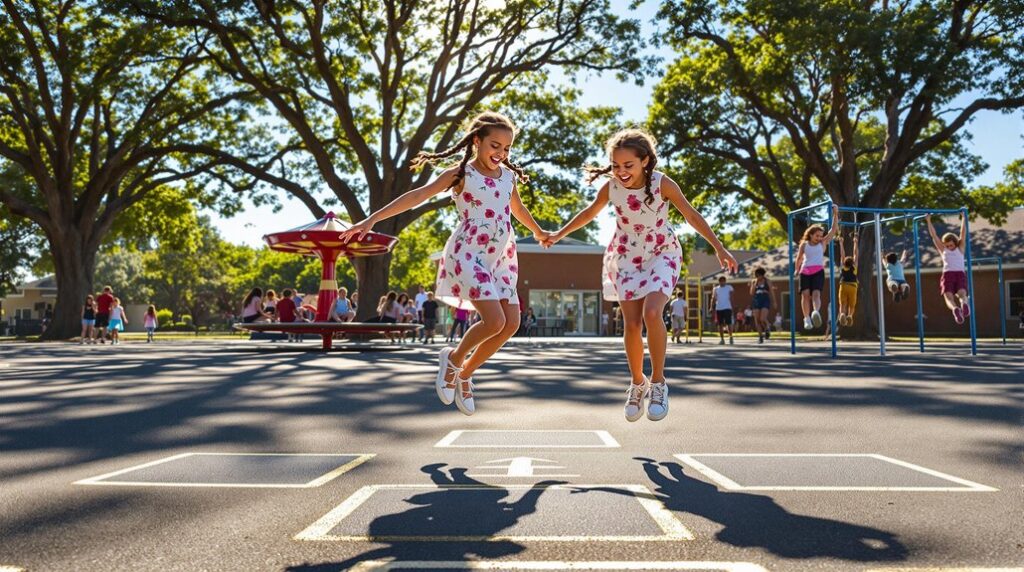
Playground games serve as vital catalysts for child development, combining physical exercise with social skill-building opportunities. These traditional activities, from tag to hopscotch, enhance cardiovascular health while developing essential motor skills and coordination. Through active play, children naturally cultivate teamwork abilities, emotional intelligence, and cognitive functions. The outdoor setting provides additional mental health benefits, reducing stress and anxiety while boosting self-esteem. Understanding these games reveals a wealth of developmental advantages for growing minds and bodies.
Why Playground Games Matter for Child Development
While children engage in playground games primarily for enjoyment, these activities serve as vital developmental tools that shape various aspects of their growth.
Research demonstrates that playground activities foster physical development through cardiovascular exercise, enhance coordination, and promote overall fitness.
Regular physical activity on the playground strengthens children's bodies, improves their motor skills, and contributes to their overall health.
These games simultaneously cultivate significant social skills, emotional intelligence, and cognitive abilities through structured and unstructured play.
In addition, playground interactions facilitate problem-solving capabilities, communication skills, and emotional regulation, while teaching children valuable lessons about teamwork, leadership, and conflict resolution.
The combination of physical activity and social engagement creates an extensive environment for holistic child development.
Physical Benefits of Traditional Playground Activities
Traditional playground activities serve as powerful catalysts for physical development, offering children ample opportunities to enhance their gross motor skills and overall fitness.
Games like tag, hopscotch, and four square promote cardiovascular health while simultaneously developing coordination and balance. These activities contribute greatly to building endurance, strength, and agility through natural, engaging movements.
Additionally, playground games combat childhood obesity by maintaining healthy weight levels through consistent physical engagement. The varied movements required in different games work multiple muscle groups, fostering thorough physical development and establishing foundational movement patterns essential for lifelong health.
Building Social Connections Through Active Play
Through dynamic interactions on the playground, children develop essential social connections that form the foundation of their interpersonal skills.
Engaging in games like freeze tag and kickball facilitates the development of teamwork, communication, and emotional intelligence. These structured activities provide opportunities for children to practice negotiation, conflict resolution, and appropriate self-expression within a peer group setting.
Research indicates that collaborative play strengthens social bonds, enhances empathy, and cultivates lasting friendships. The collective experience of active games enables children to understand social cues, respect boundaries, and develop the interpersonal competencies necessary for lifelong relationship building.
Essential Playground Games Every Child Should Know
Several fundamental playground games serve as cornerstones of childhood development and social interaction. Games like tag, hopscotch, and four square provide essential opportunities for physical activity while fostering important social skills.
Traditional favorites such as Simon Says and Red Light, Green Light help children develop listening skills and self-control, while team-based activities like kickball and capture the flag encourage strategic thinking and cooperation.
These time-tested games, which have endured across generations, continue to play significant roles in children's physical fitness, cognitive development, and social competence, making them indispensable elements of playground culture.
Mental Health Advantages of Outdoor Gaming
Scientific research consistently demonstrates that outdoor gaming activities provide substantial mental health benefits for children and adolescents.
Regular engagement in playground activities reduces stress levels, anxiety, and symptoms of depression through the release of endorphins and the promotion of positive social interactions. These games facilitate emotional regulation, boost self-esteem, and enhance cognitive resilience through problem-solving scenarios.
Additionally, outdoor play environments offer natural stress reduction benefits, as exposure to fresh air and natural settings complements the therapeutic effects of physical activity, contributing to improved mental well-being and emotional stability in developing minds.
Creating Lasting Memories on the Playground
Countless cherished childhood memories are forged in the dynamic environment of playground activities, where spontaneous adventures and shared experiences create an indelible mark on young minds. The playground serves as a theater of personal growth, fostering both individual achievements and collective triumphs that children carry into adulthood.
| Memory Type | Social Impact | Long-term Benefit |
|---|---|---|
| Team Games | Builds Trust | Leadership Skills |
| Group Play | Develops Empathy | Emotional Intelligence |
| Competition | Teaches Resilience | Problem-Solving |
| Free Play | Enhances Creativity | Innovation Capacity |
| Achievement | Boosts Confidence | Self-Efficacy |
These formative experiences shape character development, social competencies, and emotional intelligence, contributing to well-rounded individuals who value community engagement and collaborative success.
Tips for Making Playground Time More Engaging
Building upon the foundation of lasting playground memories, educators and caregivers can implement specific strategies to enhance the quality and impact of playground activities.
Structured rotations between different game stations maximize participation while maintaining engagement levels. Incorporating both traditional games and innovative activities guarantees diverse skill development opportunities.
Designating specific areas for different types of play, from active sports to creative expression zones, accommodates various interests and learning styles. Regular introduction of new games and variations prevents monotony, while maintaining consistent supervision and positive reinforcement cultivates an environment where children feel secure exploring and learning through play.
Frequently Asked Questions
How Can Parents Ensure Playground Safety During Extreme Weather Conditions?
Parents should monitor weather forecasts, dress children appropriately, check equipment temperature, guarantee proper hydration, limit exposure during extreme conditions, and choose indoor alternatives when necessary.
What Alternatives Exist for Children With Physical Disabilities to Enjoy Playground Games?
Like a garden of possibilities, adapted playground games include seated volleyball, modified hopscotch, wheelchair basketball, sensory activities, and inclusive equipment designed specifically for children with varying physical abilities.
When Is the Best Age to Introduce Competitive Playground Games?
Competitive playground games can be introduced around ages 6-7, when children develop better emotional regulation, understanding of rules, and social skills needed for healthy competition and good sportsmanship.
How Can Schools Incorporate Traditional Playground Games Into Academic Learning?
Schools can integrate hopscotch for math, Simon Says for language skills, and tag games for physical education. Traditional games enhance learning while maintaining student engagement through movement-based educational activities.
What Strategies Help Integrate Shy or Socially Anxious Children Into Group Games?
Research shows gradual exposure works best. Teachers can assign buddies, start with small group activities, offer structured roles, and use cooperative games that minimize competition while building confidence.